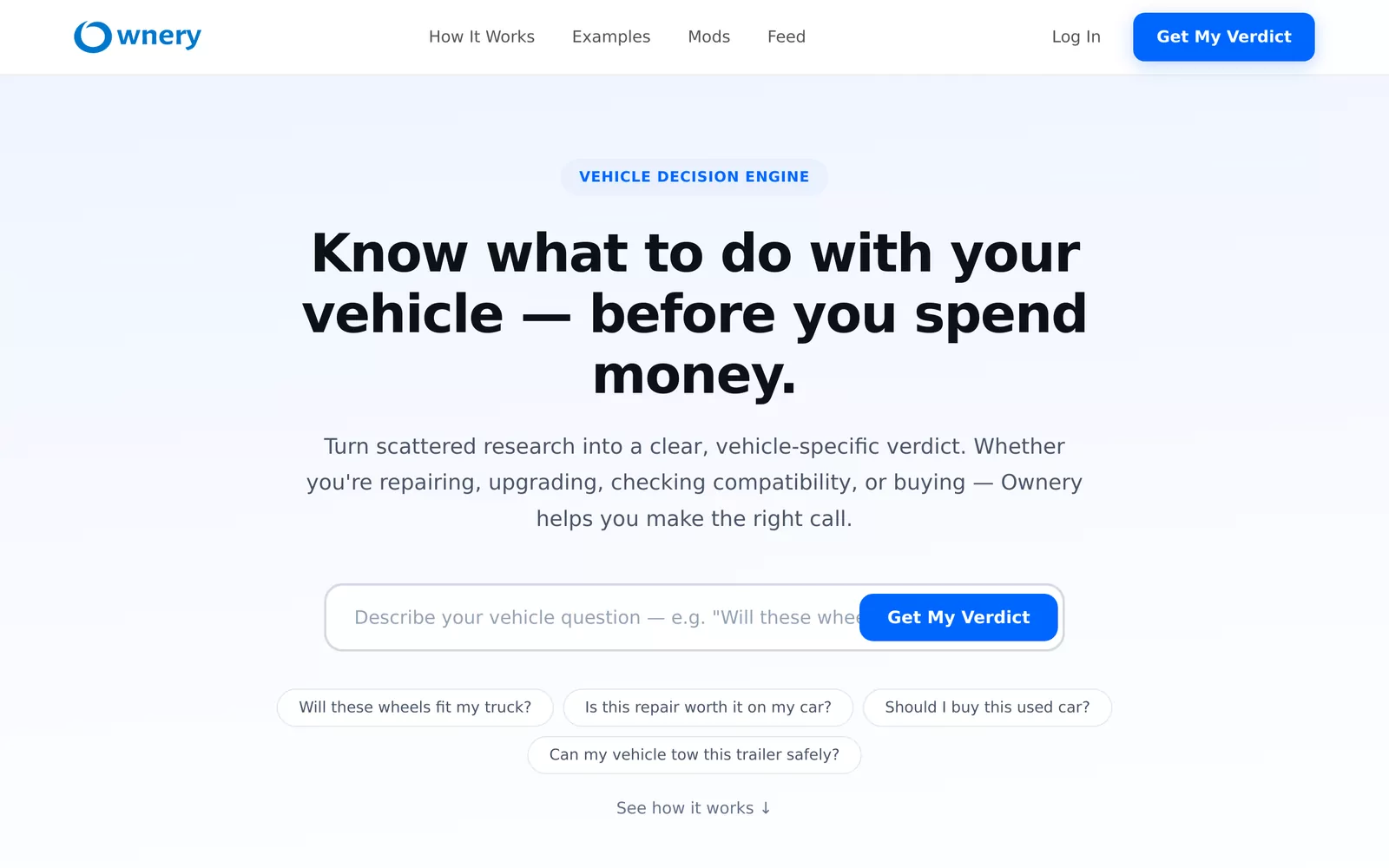
Ownery is a vehicle decision engine. It takes the question an owner is actually trying to answer — should I fix this, will this part fit, should I buy this car, can I tow this — and returns a structured verdict for that specific vehicle instead of another page of search results.
The problem
Vehicle decisions are expensive and badly served by the open web. Someone deciding whether a repair is worth approving, whether a set of wheels will clear their suspension, or whether a used car is worth the asking price ends up reading forum threads, spec sheets, marketplace listings and video reviews — and still has to make the call themselves. The research is abundant. The answer is not.
What Ownery does
Ownery is built around a single interaction: describe the vehicle and the decision, get a verdict. Rather than returning articles, it returns a structured answer — the options actually available, a realistic cost range for each, the risks involved, the effort and complexity, and a clear recommended action.
Verdicts resolve into language an owner can act on: allowed, conditions apply, or not recommended — with the conditions spelled out rather than implied.
Core decision areas
- Repair — fix, replace, diagnose further or move on, with cost, risk and effort weighed against the vehicle’s actual value.
- Upgrade and compatibility — whether wheels, tyres, towing setups or engine swaps fit, are safe, and are worth doing on that exact vehicle.
- Buy or walk away — what to inspect first, known issues for the model, and a clear buy or walk verdict.
- Towing and capability — whether a vehicle can safely tow a given load, and what equipment that requires.
- Vehicle memory — an optional saved garage where the vehicle, its past verdicts, maintenance and modifications stay connected.
Why it is an interesting product to build
Most automotive content is written to be read. Ownery is built to be decided with, and that changes the engineering problem. The product has to reason across vehicle specifications, fitment relationships, capability limits and known failure patterns, then compress the result into an answer narrow enough to act on and honest enough to carry its own conditions.
The second interesting property is memory. A single question can be answered without an account, but owners who save their vehicle accumulate an ownership record — decisions considered, repairs made, modifications logged. That record makes every later answer more specific, and it has independent value at resale.
Status
Ownery is live and free to use. It launches with cars and trucks — the highest-cost, most-researched vehicle decisions — and presents motorcycles, RVs, trailers and boats as the next categories for the decision engine.